


onlineBahraini Dinar: where to buy counterfeit money online
where to buy counterfeit money online The Bahraini Dinar (BHD) is the official currency of the Kingdom of Bahrain, a small yet economically significant nation in the Persian Gulf. Renowned for its stability and strong value in the global market, the Bahraini Dinar has been a symbol of Bahrain’s financial strength and economic progress for decades. This article explores its history, structure, denominations, exchange rates, and significance in both local and international contexts.
History of the Bahraini Dinar
The Bahraini Dinar was introduced on 1 October 1965, replacing the Gulf Rupee, which was pegged to the Indian Rupee. Before this, Bahrain, along with other Gulf states, used the Indian Rupee as its official currency. The decision to adopt the Dinar was part of Bahrain’s broader efforts to establish economic independence and modernize its financial system.
Initially, the Dinar was pegged to the British Pound Sterling, reflecting Bahrain’s historical ties with the United Kingdom. However, in 1980, Bahrain switched its peg to the U.S. Dollar (USD), which continues to influence its exchange rate policy today. This peg has helped maintain the Dinar’s stability, making it one of the strongest currencies in the world.
Denominations and Coins
The Bahraini Dinar is subdivided into 1000 fils, making it a highly precise currency system. Its denominations are designed to cater to both everyday transactions and larger financial operations.
Banknotes
Bahraini banknotes come in various denominations, including:
½ Dinar
1 Dinar
5 Dinars
10 Dinars
20 Dinars
50 Dinars
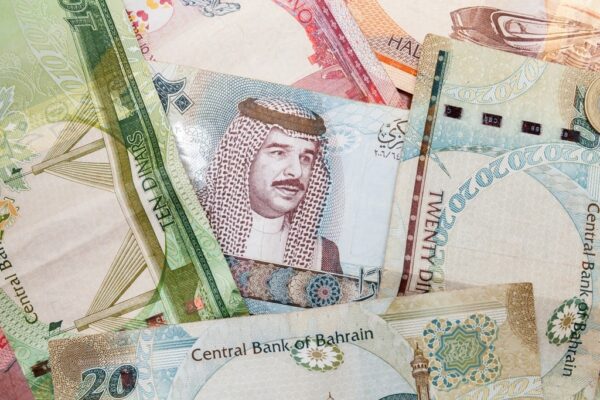
Each banknote is artistically designed to reflect Bahrain’s heritage, culture, and economic achievements. They often feature landmarks, historical sites, and notable figures from Bahraini history. The banknotes also incorporate advanced anti-counterfeiting measures, including watermarks, holograms, and microprinting, ensuring their security and authenticity.
Coins
Coins in Bahrain are issued in denominations of 5, 10, 25, 50, and 100 fils. These coins are primarily used for small transactions in daily life, such as public transport, markets, and retail purchases. The coins are made from durable metals and carry designs that represent Bahrain’s rich culture and heritage, such as traditional ships (dhows) and the national emblem.
Exchange Rate and International Value
The Bahraini Dinar is recognized as one of the highest-valued currencies globally. As of recent years, 1 BHD is approximately equivalent to 2.65 USD, reflecting its strong purchasing power. This makes Bahrain an attractive destination for investors and expatriates, as the currency provides stability amidst regional economic fluctuations.
Bahrain maintains a fixed exchange rate system with the U.S. Dollar, which helps stabilize imports, exports, and foreign investment. This system also ensures that businesses can operate confidently without fearing drastic currency devaluations.
Economic Significance
The Bahraini Dinar plays a crucial role in Bahrain’s economy, serving as a tool for both domestic trade and international commerce. The currency’s strength reflects the country’s robust financial sector, which includes banking, oil and gas, and real estate.
Banking and Finance
Bahrain is considered a financial hub in the Middle East, with a thriving banking sector that supports both local and international clients. The stability of the Bahraini Dinar contributes significantly to the confidence of investors and multinational corporations operating in the country.
Oil and Gas Industry
The nation’s economy heavily relies on the oil and gas sector, which contributes a substantial portion of Bahrain’s GDP. The strong value of the Bahraini Dinar helps stabilize oil revenues and ensures smooth international trade transactions.
Tourism and Trade
Bahrain is emerging as a tourist destination, attracting visitors from across the globe. A stable currency facilitates seamless transactions for tourists and encourages investment in the hospitality and retail sectors. Additionally, trade partners value the Dinar’s consistency in international dealings, enhancing Bahrain’s economic credibility.
Collectability and Numismatic Value
Beyond its monetary function, the Bahraini Dinar has also become a subject of interest for currency collectors worldwide. Limited edition banknotes and coins, particularly those commemorating national events or milestones, are highly sought after. These numismatic items often appreciate in value over time, offering both historical significance and investment potential.
Security Features
Security is a key aspect of the Bahraini Dinar. Banknotes incorporate multiple features to prevent counterfeiting, including:
Watermarks depicting Bahrain’s national emblem
Holographic strips for higher denominations
Microprinting and fine line patterns
Color-shifting inks for easy verification
These measures ensure that both residents and international businesses can rely on the Dinar as a secure and trustworthy currency.
Future Outlook
The future of the Bahraini Dinar appears promising. With ongoing economic diversification efforts, particularly in finance, technology, and tourism, the currency is expected to maintain its strength. Bahrain’s government continues to implement policies that enhance the nation’s financial infrastructure, ensuring the Dinar remains competitive and globally respected.
Moreover, Bahrain’s participation in regional economic agreements, along with its commitment to innovation in digital banking, positions the Dinar as a forward-looking currency suitable for both traditional and modern financial ecosystems.
Conclusion
The Bahraini Dinar (BHD) is more than just a medium of exchange; it symbolizes Bahrain’s economic stability, cultural heritage, and financial ambition. From its inception in 1965 to its current status as one of the world’s strongest currencies, the Dinar has played a pivotal role in shaping Bahrain’s economic identity.
Whether used in everyday transactions, international trade, or as a collectible, the Bahraini Dinar remains a cornerstone of the Kingdom’s economy. Its stability, backed by a strong banking sector and prudent fiscal policies, ensures that it will continue to be a reliable and respected currency in the global financial landscape for years to come.

There are no reviews yet.